Αναρτήσεις

Εμφάνιση αναρτήσεων με την ετικέτα English

Translate

Η Κυρά της Φυλακωπής / The Lady of Phylakopi

Εικόνα
Ελληνική ιστορία  /  Αρχαία Ελλάδα  -  Τεχνουργήματα  / Αγάλματα / Statues -    Τελευταίες Αναρτήσεις Η "Κυρά της Φυλακωπής", πήλινο γραπτό γυναικείο ειδώλιο θεάς ή ιέρειας, από το μυκηναϊκό "ιερό" της Φυλακωπής έναν από τους σημαντικότερους προϊστορικούς οικισμούς στο Αιγαίο. 14ος αιώνας π.Χ. Θεωρείται ότι αναπαριστά τη Μητέρα Θεά, σύμφωνα με τη μυκηναϊκή θρησκεία. Αρχαιολογικό Μουσείο της Μήλου The Lady of Phylakopi. Wheel-made female figurine of a goddess or priestess from West Shrine in Phylakopi. Height 45 cm. Late Helladic III A period, Phylakopi III, probably 14th century BC. Archaeological Museum of Milos, Cat. no. B 655. Discovered by Colin Renfrew, Excavations 1974-77.

Parian Chronicle (ancient Greek inscription)

Εικόνα
ΕΛΛΗΝΙΚΑ The Parian Chronicle is an ancient Greek inscription, found in Paros, and is a chronological table of various events in Greek history, from 1581-80 BC, the time of the mythical king of Athens Cekrops, to 263-262 BC, year in which Diognitus was ruler in Athens. The "author" of the inscription has given special importance to cultural events (year of birth and death of the greatest writers and establishment of various struggles) and only incidentally refers to political events. Two passages survive from the Parian Chronicle, one, the largest, in Oxford, The author of the text of the Parian Chronicle is unknown, but it can be dated to 264/63 BC. thanks to the mention of the name of the Athenian lord Diognetus (l. 3). Detail from the smallest fragment of the chronicle, containing the years 356–299 BC. The "Pario Chronicle", or in the modern Greek Chronicle of Paros, is an ancient Greek epigraphic text found on a tombstone, also called "oxonion marble",...

Lavara: A heroic village in Evros!

Εικόνα
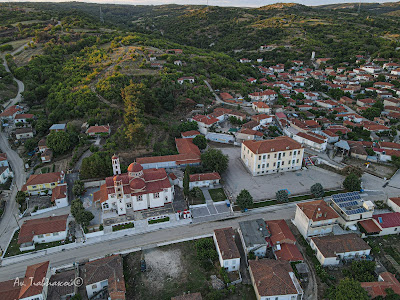
Λάβαρα : Ένα ηρωικό χωριό στον Έβρο! Lavara is a village / town (κωμόπολη) of Evros, on the national road that connects Soufli with Didymoteicho. The village took its name from Lavaro (blue with a black cross in the middle) that 300 men raised on May 2, 1821, the day of the Removal of the Relics of Saint Athanasios, trapping the numerous Turkish army in the KOURI forest and after attacking them at night they dispersed them . For two days the panicked Turks tried to get out of the forest and those who escaped went to the mountain village of Mavrokklisi. In 1834 the residents built the church of Agios Athanasios and in 1920 the renaming committee named the village Lavara in memory of the heroic battle. In the past it was called Salia from the flat boats that crossed the Evros. Another version is that it comes from Sal = free because the inhabitants did not pay taxes to the Turks but only had the obligation to take care of and train the horses of the Sultans' guard. Lavara (formerly S...

General conscription decree of Philip V, 197 BC.

Εικόνα
ΕΛΛΗΝΙΚΑ A very important inscription exhibited in the Archaeological Museum of Thessaloniki takes us to the beginning of the 2nd century. e.g. The inscription vividly gives us the image of the dramatic days of the war of the Macedonian forces to face the Roman danger in its final phase. It dates back to 197 BC. and is one of the copies of the general decree for the conscription of the male population issued by King Philip V for the entire Macedonian territory. This is the largest royal diagram from the kingdom of Macedonia. The text gives instructions for general conscription by town by enlisting the males of each household according to the census lists. The inscription reveals the criticality of the situation and Philip V's anxiety over the great lack of Macedonian recruits due to the long wars waged by the kingdom. This can be seen from the fact that the king enlists not only veterans over 50 but also minors as young as 15. An extremely interesting element is the information tha...

Head of Isis, after 138 AD / Κεφάλι της Ίσιδας, μετά το 138 μ. Χ..

Εικόνα
Ελληνική ιστορία  /  Αρχαία Ελλάδα  -  Τεχνουργήματα  / Αγάλματα / Statues -    Τελευταίες Αναρτήσεις Head from a cult statue of Isis, after 138 AD. Archaeological Museum of Thessaloniki.Greece Κεφάλι από λατρευτικό άγαλμα της Ίσιδας, μετά το 138 μ. Χ.. Αρχαιολογικό Μουσείο Θεσσαλονίκης, Ελλάδα. Τα μαλλιά ήταν χρωματισμένα και πιθανόν επιχρυσωμένα. Από το μεγάλο ιερό των Αιγυπτίων θεών της αρχαίας Θεσσαλονίκης, Ελλάδα The hair was colored and possibly gold-plated. From the great sanctuary of the Egyptian gods of ancient Thessaloniki, Greece

Head of Isis, 3rd c. BC / Κεφάλι της Ίσιδας, 3ου αιώνα π.Χ

Εικόνα
Ελληνική ιστορία  /  Αρχαία Ελλάδα  -  Τεχνουργήματα  / Αγάλματα / Statues -    Τελευταίες Αναρτήσεις Κεφάλι της Ίσιδας, Αρχαιολογικό Μουσείο Θεσσαλονίκης, Ελλάδα. Αρχές 3ου αιώνα π.Χ Head of Isis, Archaeological Museum, Thessaloniki, Greece. Early 3rd century BC Από το μεγάλο ιερό των Αιγυπτίων θεών της αρχαίας Θεσσαλονίκης, Ελλάδα From the great sanctuary of the Egyptian gods of ancient Thessaloniki, Greece

Inscribed base of a statue of Thessaloniki 2nd c. B.C. / Ενεπίγραφη βάση αγάλματος Θεσσαλονίκης, 2ος αι. π.Χ.

Εικόνα
Ελληνική ιστορία  /  Αρχαία Ελλάδα  -  Τεχνουργήματα  / Αγάλματα / Statues -    Τελευταίες Αναρτήσεις Inscription reading "To Queen Thessalonike, (Daughter) of Philip", Archaeological Museum of Thessaloniki Επιγραφή «Στη Βασίλισσα Θεσσαλονίκη, (Κόρη) του Φιλίππου», Αρχαιολογικό Μουσείο Θεσσαλονίκης Ενεπίγραφη βάση αγάλματος Θεσσαλονίκης, του 2ου αι. π.Χ., που βρέθηκε στην περιοχή της αρχαίας Αγοράς και μέρος μιας ομάδας αγαλμάτων της οικογένειας του Μεγάλου Αλεξάνδρου. Επιγραφή: ΘΕΣΣΑΛΟΝΙΚΗΝ ΦΙΛΙΠΠΟΥ ΒΑΣΙΛΙΣΣΑΝ Inscribed base of a statue of Thessaloniki, of the 2nd c. B.C., found in the area of the ancient Agora and part of a group of statues of the family of Alexander the Great. Inscription: ΘΕΣΣΑΛΟΝΙΚΗΝ ΦΙΛΙΠΠΟΥ ΒΑΣΙΛΙΣΣΑΝ Thessaloniki is a Greek city.  The city was founded in 315 BC by Cassander of Macedon, who named it after his wife Thessalonike, daughter of Philip II of Macedon and sister of Alexander the Great. 

The real cause of the war in Ukraine, the Middle East and the propaganda

Εικόνα
ΕΛΛΗΝΙΚΑ In our quest for information on some basic issues from around the world, we encountered something we all more or less knew, propaganda everywhere, from all sides on all issues, even the smallest ones. We tried to present some issues without the propaganda and we saw that all the social media are aligned on the same line on the propaganda. The American ones completely silenced us, for example in our posts from where they had thousands of likes we saw within a day a huge change and reduction almost to zero. Anything that is not in line with the propaganda is deleted, just as this article will be deleted when we upload it, for example, to Facebook. Let's get to the point of the article. What is the reason for all this propaganda? Why do we find the same issues in a strong degree in American-controlled interests (eg, Navalny)? Why do western interests do the same? real cause of the war in Ukraine, the Middle East? Here we should mention that when we say American, Russian, etc....

Attic red-figure pelike, ca 480 BC, Rome, National Etruscan Museum of the Villa Giulia

Εικόνα
ΕΛΛΗΝΙΚΑ Attic red-figure pelike, ca 480 BC, Rome, National Etruscan Museum of the Villa Giulia. How is old age (Geras) represented?  As a bald, emaciated, hunchback man with goatee beard, propping himself up on a wobbly staff. The scene depicts Hercules’ encounter with Geras, in the course of the former’s travels. The robust and handsome torso of the hero, who leans on a long club, functions as counterweight to the inevitable decrepitude that afflicts the body of mortals. © Museo Nazionale Etrusco di Villa Giulia. Photograph: Mauro Benedetti

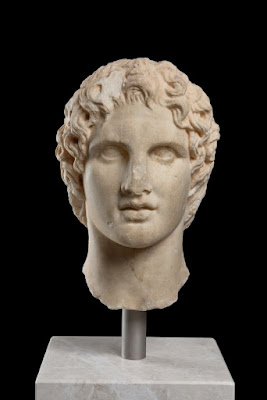
Head of a statue of Alexander the Great, 2-3 cent. BC

Εικόνα
ΕΛΛΗΝΙΚΑ © Μουσείο Ακρόπολης Head of a statue of Alexander the Great Location Archaiological Museum of Acropolis, Athens, Greece Artist Leochares Classical Period Date After 338 BC Dimensions Height: 0.35 m Length: 0.23 m Width: 0.245 m Material Marble from Penteli Description It was found in 1886 near the Erechtheion on the Acropolis. Alexander the Great is portrayed at a young age, as he would have been during his sole visit to Athens, after the battle of Chaironeia in 338 BC. The deep set eyes, the upward glance, the half-open lips as well as the characteristic hairstyle, with rich curls standing up over the forehead, the anastoli, are all typical features of Alexander. Red paint surviving in some areas of the hair was most probably the base-coat for the curls's final, golden hue; whereas the way the locks are formed at the back of the head suggests that the head was adorned either by a wreath or a band rendered in some other material that has not survived. The statue is conside...