Αναρτήσεις

Εμφάνιση αναρτήσεων με την ετικέτα Athens

Translate

Hadrian's Library

Εικόνα
ΕΛΛΗΝΙΚΑ The Library of Hadrian was a large library in ancient Athens. It was named so because it was founded by the Roman emperor Hadrian. The library was also called the University of Athens. The ancient writer Pausanias, while visiting Athens, briefly describes the Library as one of the most important buildings of Hadrian in the city: [Hadrian constructed more buildings in Athens, like the temple of Hera and Zeus Panhellenios, the common sanctuary of all the gods (Pantheon), but of great importance is the one with the one hundred columns made of phrygian stone (the library). In the same material the stoas and the walls are made.] Part of the library was a large inner courtyard measuring 100 × 70 meters, surrounded by an impressive peristyle. The main building of the library had two rooms, where visitors read, or attended lectures. The library hall was probably three-storeyed, but the third floor has not been preserved. The walls are thought to have been equipped with shelves with a ...

Odeon of Herodes Atticus

Εικόνα
ΕΛΛΗΝΙΚΑ The Odeon of Herodes Atticus (Greek: Ωδείο Ηρώδου του Αττικού; also called Herodeion or Herodion; Greek: Ηρώδειο) is a stone Roman theatre structure located on the southwest slope of the Acropolis of Athens, Greece. The building was completed in AD 161 and then renovated in 1950. 1865 It was built by Herodes Atticus in memory of his Roman wife, Aspasia Annia Regilla. It was originally a steep-sloped theatre with a three-story stone front wall and a wooden roof made of expensive cedar of Lebanon timber. It was used as a venue for music concerts with a capacity of 5,000. It lasted intact until it was destroyed and left in ruins by the Heruli in AD 267. The famous Herod Atticus Odeon dominates the western end on the south slope of the Acropolis. It was the third Odeon constructed in ancient Athens after the Pericles Odeon on the south slope (fifth century) and the Agrippa's Odeon in the ancient Agora (15 BC). The construction of the monument during the second century AD was s...

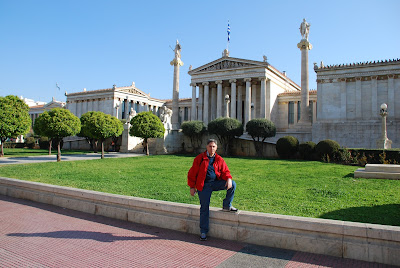
A pic infront of National Kapodistrian University of Athens, 2010 / Μια φωτό μπροστά απ' το Εθνικό Καποδιστριακό Πανεπιστήμιο Αθηνών, 2010

Εικόνα
Ταξίδι στον Χρόνο  /  Φωτογραφικό αρχείο  -  Τελευταίες Αναρτήσεις Beautiful people  -  Latest posts  /  Όμορφοι άνθρωποι  -  Tελευταίες αναρτήσεις Just did it  -  Τελευταίες αναρτήσεις (Latest posts) Αθήνα ( Athens ) A pic infront of National Kapodistrian University of Athens,2010  Μια φωτό μπροστά απ' το Εθνικό Καποδιστριακό Πανεπιστήμιο Αθηνών, 2010 Μr. Rosario Colosi  did it, Visited Athens back to 2010.  A picture of him infront of the National Kapodistrian University of Athens Ο κ. Ο Rosario Colosi τα κατάφερε, Επισκέφτηκε την Αθήνα το 2010. Μια φωτογραφία του μπροστά από το Εθνικό και Καποδιστριακό Πανεπιστήμιο Αθηνών Photo Rosario Colosi  

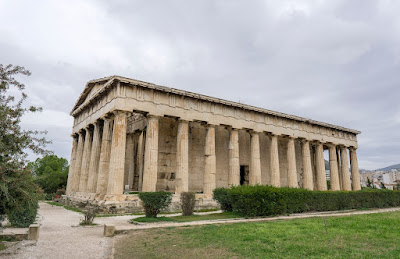
The Temple of Hephaestus (Hephaisteion), Athens, Greece

Εικόνα
ΕΛΛΗΝΙΚΑ On top of Agoraios Kolonos hill, which is delimiting the Ancient Agora of Athens to the west, stands the temple of Hephaestus, broadly known as ?Thisio?. It is one of the best preserved ancient temples, partly because it was transformed into a Christian church.  Ancient Agora of Athens- Areios Pagos The Ancient Agora of Athens is a flat area defined by the Sacred Rock of the Acropolis and the hill of Areopagus in the south and the hill of Kolonos Agoraios in the west. It is traversed by one of the most important ancient roads, the Panathenaic Way, which led to the Acropolis from the main gate of the city, the Dipylon Gate. This road served as the processional way for the great parade of the Panathenaic festival, which was held to honour the city patron goddess Athena. To the north, near ... The Temple of Hephaestus or Hephaisteion (also "Hephesteum" or "Hephaesteum"; Ancient Greek: Ἡφαιστεῖον, Greek: Ναός Ηφαίστου, and formerly called in error the Theseion ...

Plaka, Athens

Εικόνα
Πλάκα, Αθήνα The Pláka district is an original working-class neighborhood in Athens. This neighborhood is located near the foot north of the Acropolis. Today this is no longer a residential area, but a touristic and pleasant neighborhood. The neighborhood has an authentic appearance with colored houses and is full of nice streets, restaurants and bars. Due to its central location near the Acropolis, the district is also easy to reach. Plaka is the oldest and most beautiful neighborhood in Athens. Clustered around the slopes of the Acropolis, it incorporates labyrinthine streets and neoclassical architecture. Plaka is built on top of the residential part of ancient Athens. It is referred to as the "Neighborhood of the Gods" because of its proximity to the Acropolis and many other archaeological sites. Part of the charm, however, are the secrets the oldest neighborhood of Athens hides in each of the paved alleys just waiting to be discovered on your Athens sightseeing tour of P...

Unveiling the Magnificence of Ancient Athens

Εικόνα
Unveiling the Magnificence of Ancient Athens: A Glimpse into the Birthplace of Democracy Introduction: A journey through time, as we delve into the rich history of ancient Athens. Renowned for its remarkable contributions to art, philosophy, and politics, this vibrant city-state holds an indelible place in the annals of human civilization. Join us as we explore the awe-inspiring Parthenon, the birthplace of democracy, and the enduring legacy of ancient Athens. Section 1: The Birth of a City-State In the 5th century BCE, Athens emerged as a powerful city-state, nestled in the heart of Greece. Its strategic location, surrounded by mountains and the Aegean Sea, provided a natural fortress against invaders. The city-state flourished under the leadership of Pericles, who spearheaded a golden age of cultural and intellectual achievements. Section 2: The Parthenon: A Testament to Perfection At the pinnacle of ancient Athens' architectural marvels stands the Parthenon, an endur...

Unveiling the Timeless Beauty of Greece

Εικόνα
Unveiling the Timeless Beauty of Greece: A Journey through Ancient Wonders . Introduction: Greece, Hellas, a land steeped in history and mythology, where ancient ruins and breathtaking landscapes intertwine to create an unparalleled experience. From the iconic Acropolis in Athens to the sun-kissed beaches of the Greek islands, this Mediterranean gem offers a captivating blend of ancient wonders and modern delights. Join us on a virtual journey as we explore the rich tapestry of Greece's past and present, immersing ourselves in its vibrant culture, mouthwatering cuisine, and warm hospitality. Section 1: The Birthplace of Democracy Greece, often referred to as the cradle of Western civilization, holds a special place in history as the birthplace of democracy. Ancient Greece was home to renowned philosophers, such as Socrates, Plato, and Aristotle, who laid the foundation for modern political thought. The city-state of Athens, with its majestic Acropolis and Parthenon, stands as a...